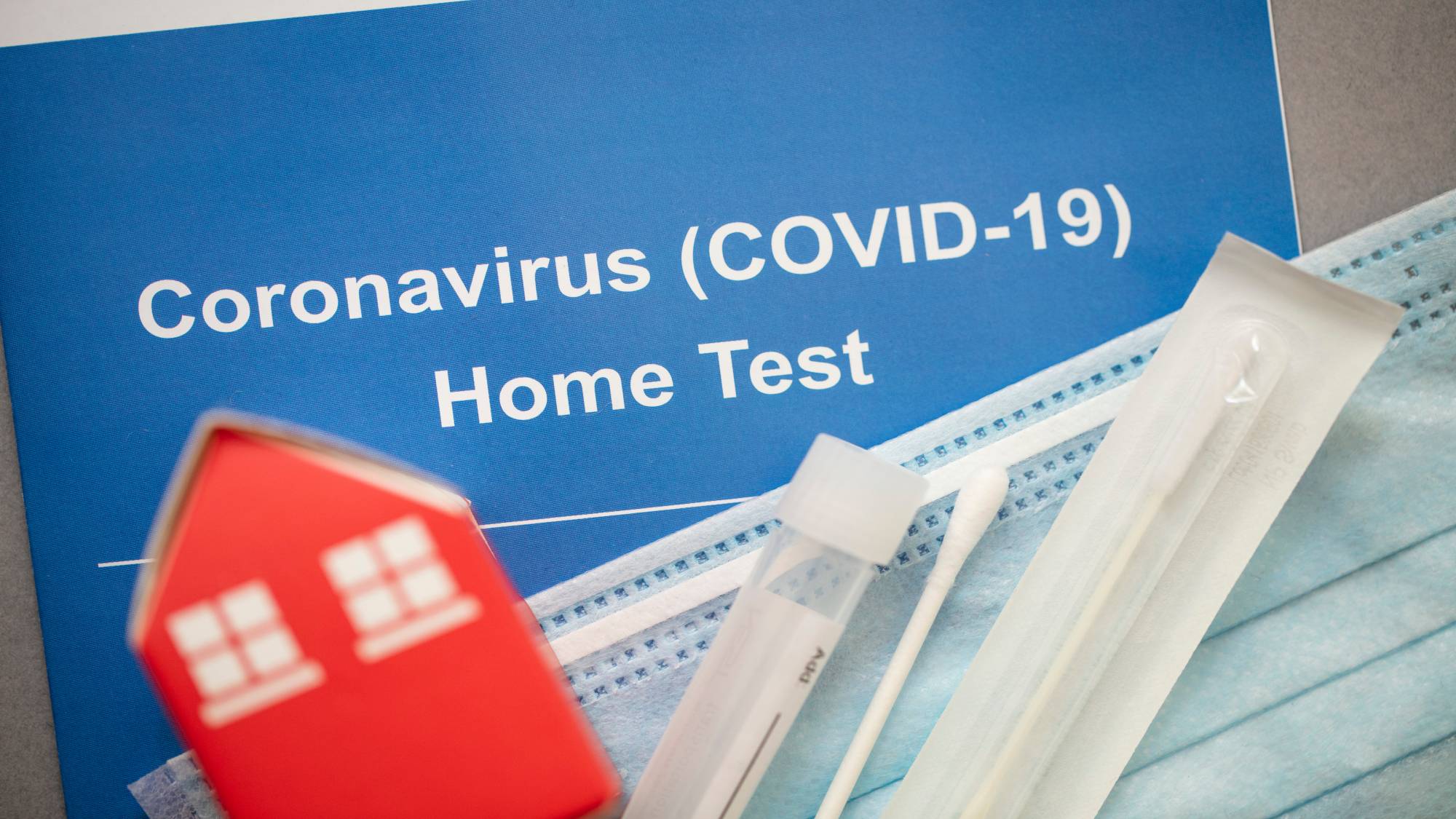
In fulfillment of President Biden’s promise to make at-home COVID tests more available for all of us, two significant action steps have now occurred:

  1. Every U.S. household has access to free at-home COVID-19 tests. As of January 18, 2022, any individual with a residence in the United States may request up to four (4) at-home COVID test kits.  There is no cost to register or for the kits themselves.
  1. At-home COVID-19 testing is available at no cost without a prescription under an employer’s group health plan. On January 10, 2022, the Department of Labor (DOL) released updated guidance and an FAQ that, as of January 15, 2022, now extends an employer’s obligation to cover all types of COVID-19 tests, between those performed or prescribed by a physician or other health care provider,  and for in-home COVID-19 tests provided without a doctor’s order.

Key Points:

All group health plans and insurance carriers must now cover the cost of at-home COVID-19 test kits, passing none of that cost to employees or individuals covered under the plan, and without requiring a medical diagnosis or prescription from a health care provider.

  • The plan or insurer need not provide this coverage to employees not covered under the employer’s plan.
  • For these purposes, the coverage can be provided through an employer’s medical plan, pharmacy benefit plan/PBM, or both. Employers should discuss the options and costs for administering this arrangement under their particular plan with their brokers and consultants or insurance carriers.
  • The guidance allows a plan or insurer to meet this coverage obligation in one of two ways:
    • The plan can work with its insurance carrier or third-party claims administrator (TPA) to create “direct contract” arrangements with retailers (e.g., Walmart, RiteAid, Walgreens, etc.) and other insurance network providers to provide COVID tests to covered individuals at no cost to the individual at the counter; costs are negotiated and paid between the plan/insurer/TPA with the retail service provider directly.
    • Individuals can also purchase COVID tests through any other resource and submit the receipt for reimbursement through the plan or insurer’s established process, either through the insurance carrier, TPA or PBM. The maximum amount to be paid in reimbursement is the lesser of: (a) the actual cost of the COVID test; or (b) $12 per test (note: if the COVID kit comes with two tests, the cost to be reimbursed would be per test or a maximum of $24).  The plan or insurer does not have to reimburse for COVID tests purchased before January 15, 2022.
    • Suppose a plan or issuer is unwilling or unable to satisfy the above criteria in providing the opportunity to receive COVID testing coverage under either of the above criteria. In that case, the plan or issuer must still provide reimbursement of at-home COVID tests without the above cost limitations.
  • The plan or insurer can limit the total number of COVID tests to 8 per person per month (or 4 kits if the kit includes two tests). A separate limit applies for each covered family member (e.g., a family of 4 could receive up to 32 tests per month (or 16 kits, if it includes two tests each).  There is no annual maximum limit.
  • An individual need not provide proof of medical need, but the plan can require the individual to attest that they are purchasing only for personal use (not for resale).
  • Employers are encouraged to communicate to all covered individuals about the alternatives available and processes for seeking reimbursement of purchased tests.
  • The obligations for coverage of at-home COVID tests remain in effect for at least the remainder of the Public Health Emergency period, which has now been extended to at least April 15, 2022.
  • COVID testing and other related costs provided at a health care provider or other health care facility as part of a medical assessment must still be covered 100 percent by the plan or issuer without being subject to the test or cost limits that apply for over-the-counter COVID tests, under previous guidance under the CARES Act, and the First Families Coronavirus Response Act (FFCRA).

Employer sponsors of group health plans are likely to have received at least some information from their TPA, insurance carrier, or other brokers and consultants about the steps to be taken related to the guidance provided under the most recent DOL FAQ.  Members of the Jackson Lewis Employee Benefits group are also available to discuss options and alternatives.  Please contact a Jackson Lewis employee benefits team member or the Jackson Lewis attorney with whom you regularly work if you have questions or need assistance.
California, Minnesota, and Washington, D.C. employers saw recent changes to COVID-19-related rules and regulations. See below for details.

California

Cal/OSHA and CDPH Issue Clarifying Guidance on Isolation and Quarantine Requirements

Minnesota

Minneapolis and St. Paul to Require Proof of Vaccination or Negative Test for Certain Businesses

Washington, D.C.

D.C. Employees to Get Paid Leave for COVID-19 Vaccines Well into 2022

the U.S. Supreme Court has granted a temporary stay of the OSHA Emergency Temporary Standard. Read more.

The Centers for Medicare & Medicaid Services (CMS) will enforce its COVID-19 vaccination requirement in 25 states, the District of Columbia, and other territories. Read more.

As 2021 comes to an end, the White House and the Department of State have announced:

  1. South African Travel Restrictions Lifted.

The 14-day travel restrictions on southern African countries will be lifted as of midnight on December 31, 2021. Adopted on November 29th, the restrictions based on spread of the COVID-19 Omicron variant have been in effect for travelers from Botswana, Eswantini, Lesotho, Malawi, Mozambique, Namibia, South Africa, and Zimbabwe. The requirements that all travelers to the United States, unless otherwise excepted, must be fully vaccinated and present a negative COVID-19 test taken within one day of travel remain in effect.

  1. New Waivers of In-Person Visa Interviews.

To help ease the nonimmigrant visa backlogs, consular officials will have the discretion to waive in-person interview requirements for some with H-1, H-3, H-4, L, O, P, and Q USCIS-approved petitions until the end of 2022. The eligibility requirements for those who were previously issued a visa in the same category are:

  • No visa refusals, unless the refusal was overcome or waived
  • No apparent or potential ineligibility
  • Must be applying in their country of nationality or residence

For those applying for the first time for the visa category:

  • Must be a citizen or national of a Visa Waiver country
  • No apparent or potential ineligibility
  • Previously travelled to the U.S. on ESTA

The discretionary interview waiver has also been extended until the end of 2022 for certain students, professors, research scholars, short-term scholars, or specialists (e.g., F, M, and academic J applicants), for those applying for H-2 (temporary agricultural or non-agricultural) visas, and for those who are renewing any visas within 48 months of expiration.

Because consular resources and COVID-19 restrictions vary, applicants should check the relevant embassy or consular website to confirm available services.

  1. Expired U.S. Passports Can Still Be Used.

Citizens can continue to use expired U.S. passports to return to the U.S. until March 31, 2022. To be eligible, the individual must:

  • Be a U.S. citizen
  • Be currently abroad
  • Be flying directly to the United States, a U.S. territory, or have only a short-term transit, or connecting flight, through a foreign country on their return to the United States
  • Have been issued and possess an expired, undamaged passport that was originally valid for 10 years or, if 15 years of age or under when the passport was issued, the original validity must be for five years

Jackson Lewis attorneys are available to advise you on these new procedures. We wish you a happy new year!

The status of the OSHA ETS is evolving daily. See below for the most recent updates.

SCOTUS Questioning Suggests OSHA ETS is Squeezing an Elephant into a Mousehole

Several cities, states, counties and Puerto Rico have made updates to their COVID-19-related laws, regulations and orders. See below for the latest news.

California

California Mandates COVID-19 Booster for Workers in Health Care, Adult Care Facilities and Direct Care by February 1, 2022

Employers in the U.S. are facing regulatory upheaval on multiple fronts. The federal government has taken up a new interest in potentially limiting the applicability of restrictive covenants, such as non-compete agreements. Meanwhile, the Occupational Safety and Health Administration (OSHA) has issued an Emergency Temporary Standard (ETS) (currently stayed by the Fifth Circuit) requiring employers with 100 or more employees to ensure all employees are either vaccinated or taking weekly COVID-19 tests.

These seemingly disparate legal trends are colliding in recent federal and state bills.

On November 3, 2021, nine Republican House Members sponsored a Federal bill that would void existing non-compete agreements for any employee who is fired for “not receiving a COVID-19 vaccine.” The bill would also require the Federal Trade Commission (FTC) to issue regulations prohibiting employers from enforcing non-compete agreements with such employees.

Similar bills have been introduced around the country. The trend began in Texas and Tennessee, then New Hampshire followed suit on November 16, 2021.

The Tennessee bill has even more “bite” than its federal and state companions. If a private employer requires the signing employee to receive a vaccine as a condition of employment, any non-compete, non-solicitation, non-disparagement, or confidentiality provision entered after the effective date of the proposed law would be void and unenforceable. Even if the employee gets the vaccine voluntarily and later resigns to work for a competitor, these provisions would be void simply by virtue of the employer having required the vaccine in the first place.  (Which, of course, may be mandatory under federal law.)

Whether any of these bills actually gains traction remains to be seen. We will continue to monitor this legislation and post updates once we know more. In the meantime, Jackson Lewis attorneys are available to assist employers navigate regulatory changes in these, and other, areas of law.